Porcelain veneers
Thin, custom-made shells cover the front of selected teeth. They can change appearance, but preparation may involve permanent removal of tooth structure. Discuss whether veneers suit your teeth and bite.

HOSPITALI CLINIC · ISTANBUL
The right change starts with the right treatment. Compare veneers, crowns, bonding, and whitening with your oral health and your preferred smile in mind.
Discuss your treatment ↗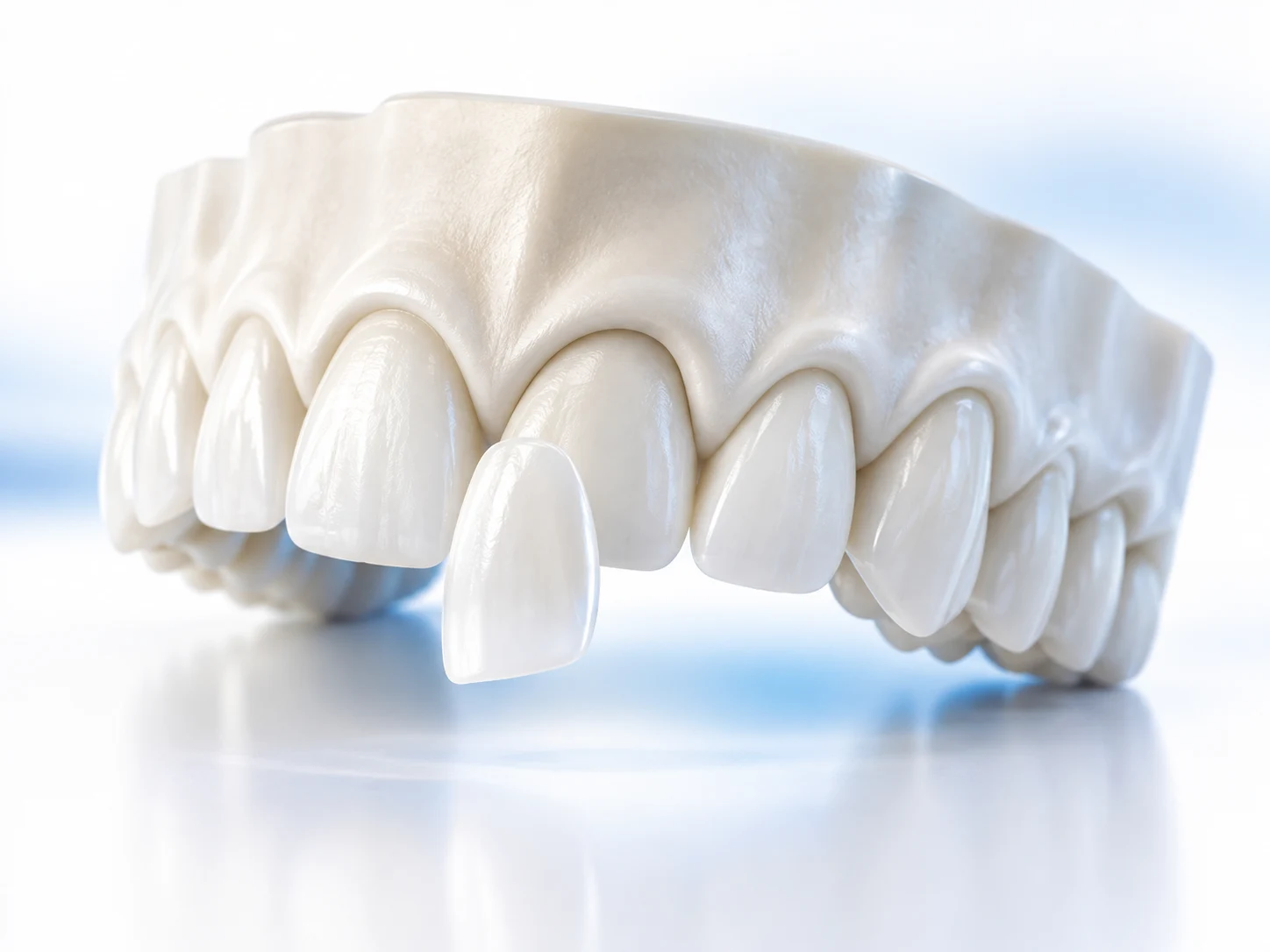
Explore changes to tooth colour, shape, or appearance.
Assess teeth, gums, bite, and the changes you would like.
Select treatments individually; avoid unnecessary preparation.
UNDERSTAND YOUR OPTIONS
Cosmetic dentistry is a group of treatments rather than one procedure. Different concerns need different approaches: a colour change is not the same problem as a damaged tooth, an uneven edge, or a missing-tooth space. Choosing the procedure starts with understanding the concern and the condition of the tooth.
Hospitali’s cosmetic consultation brings your preferences into a clinical discussion. We look at the smile as a whole while considering each tooth separately. You can discuss the shade, shape, symmetry, and level of change you want, then compare what the proposed treatments would involve.
TREATMENT OPTIONS
Thin, custom-made shells cover the front of selected teeth. They can change appearance, but preparation may involve permanent removal of tooth structure. Discuss whether veneers suit your teeth and bite.
A crown covers a tooth more extensively than a veneer. It may be considered for a weakened or damaged tooth. Preparation, the underlying tooth, and future maintenance should be part of the discussion.
Tooth-coloured composite can be added to selected areas to change an edge, shape, or small defect. Ask about staining, wear, repair, and how the finish is maintained over time.
Whitening aims to lighten natural teeth. Existing crowns, veneers, and fillings do not respond in the same way, so planning should consider how they will look alongside the natural teeth.
POTENTIAL BENEFITS
Explore a focused change rather than assuming every visible tooth needs the same treatment.
Understand preparation, appearance, maintenance, and the limits of each option.
Discuss the amount of change and the style you feel comfortable with.
COMPARE THE APPROACHES
| Approach | What it addresses | What to discuss |
|---|---|---|
| Whitening | A change in natural tooth colour | Existing restorations may not match a newly lightened shade. |
| Bonding / veneers | Changes to selected tooth surfaces or shapes | Compare preparation, durability, staining, and repair. |
| Crowns | More extensive coverage of a tooth | Ask why full coverage is appropriate for the tooth involved. |
YOUR TREATMENT, STEP BY STEP
Tell us which parts of your smile you like and what you would change. Photos can explain a preference, but they do not replace examination or set a guaranteed outcome.
We assess the teeth and surrounding tissues before cosmetic planning. Existing decay, gum problems, or other concerns may need attention before elective appearance changes.
Compare the proposed procedures and the amount of tooth preparation. Ask about shade, translucency, strength considerations, repair, and future replacement.
Digital planning or a proposed mock-up can support the discussion where appropriate. Confirm what the preview represents and which aspects may change during clinical treatment.
The steps depend on the chosen procedure. Custom restorations involve preparation, records, fabrication, and fitting; the clinician explains any temporary work and review points.
Discuss cleaning, habits that may damage restorations, and the need for professional reviews. Report a rough edge, sensitivity, discomfort, or a bite that feels different.
RECOVERY & CLINICAL CONSIDERATIONS
The experience after treatment differs by procedure. Ask whether temporary sensitivity, gum tenderness, or an adjustment period is expected for your plan. If you have temporary restorations, understand their care and what to do if one becomes loose. Before you leave, confirm the final fit and bite review and the appropriate follow-up arrangements.
Cosmetic treatment can involve irreversible tooth preparation. Sensitivity, damage or failure of a restoration, gum changes, and future replacement are among the issues to discuss. A more dramatic appearance change can also carry different compromises. Make sure your decision reflects what you understand and want.
This is general information. Your clinician will explain suitability, benefits, risks, and alternatives for your case. Outcomes and treatment times vary.
COSTS & VISIT PLANNING
Ask which teeth and procedures are included, the exact material proposed, whether laboratory work or temporary restorations are part of the estimate, and how adjustments are handled. A package label should not replace an explanation of the work planned for each tooth.
We can coordinate your visit around the proposed appointment schedule. Confirm your package inclusions and leave room for clinically necessary changes before arranging flights or accommodation.
Request your treatment proposal ↗COMMON QUESTIONS
They serve different purposes and cover different amounts of a tooth. The appropriate choice depends on the condition of the tooth and the treatment objective, not simply on a preferred material or appearance.
Some procedures require tooth preparation and others may involve little or none. Ask the clinician to show which teeth would be altered, why, and which alternatives would preserve more tooth structure.
Whitening changes natural teeth but does not whiten crowns or veneers in the same way. Existing restorations need to be considered when planning the final shade.
Some appearance changes may be possible, but tooth position and bite can make orthodontic treatment a relevant alternative. Ask for a comparison before choosing a restorative solution.
Contact the clinic or a local dentist for assessment. Repair options depend on the material, the damage, and the underlying tooth. Avoid assuming every restoration can be repaired in the same way.
Discuss your preferences, surrounding teeth, and the overall appearance you want. Ask to review shade choices during planning and understand the limits of photographs and screen previews.
EXPLORE YOUR CARE
HERE FOR YOUR QUESTIONS
EXPLORE IN MORE DETAIL
PATIENT GUIDES